What is landed cost? Formula, components and an import cost example.
The supplier's price is only part of the cost. This article explains what landed cost is, the formula, the cost components and a real example so businesses quote accurately and control profit per shipment.
When importing goods, many businesses start with a very simple question: “What is the supplier's price?”. In reality, the purchase price is only one part of the total cost and does not fully or accurately reflect the cost needed to set a selling price.
Once a shipment reaches the warehouse, it can incur international freight, insurance, import duty, VAT, local charges, customs clearance fees, storage fees, domestic transport and many other costs. Pricing solely from the invoice value makes it easy to quote below the true cost.
This is why businesses need to clearly understand what landed cost is, what it includes and how to calculate it correctly. This article walks you through the formula, the cost components, a real example and how GExim.ai helps automate the import cost calculation.
What Is Landed Cost?
Landed cost is one of the most important metrics for any importing business. It shows the real total cost of bringing a product from an overseas supplier to the company's final location — usually a warehouse, factory or distribution center.
Defining landed cost in import & export
Landed cost is the total cost a business pays for goods to be imported and ready to use, store or sell on the market.
Simply put, landed cost is not just the purchase price. It is every cost involved in bringing goods to the destination, including goods value, international freight, cargo insurance if any, import duty, import VAT, port and handling fees, document fees, customs clearance costs, domestic transport and other incidental costs.
In international trade, Incoterms define the responsibilities between seller and buyer for transport, insurance, documents, clearance and related logistics. So when calculating landed cost, businesses must carefully check whether the delivery term is EXW, FOB, CIF, CFR, DDP or another condition.
Why is landed cost important?
Landed cost matters because it reflects the true cost of goods after import.
If a business looks only at the supplier's price, its decisions can be skewed. A supplier with a lower FOB price is not necessarily cheaper if freight is high, import duty is high or many handling fees pile up at the port.
Landed cost helps businesses calculate the cost of imported goods correctly, quote more accurately, know the real profit margin, compare suppliers by total cost, plan the import budget and control logistics risks.
For businesses importing many products, landed cost is also the base data for analyzing the performance of each SKU, supplier, market and transport option.
The difference between purchase price and landed cost
The purchase price is the amount a business pays the supplier per the invoice. Landed cost, on the other hand, is the total cost of getting goods to the warehouse.
For example, a business imports a shipment with an FOB price of USD 10,000. Looking only at the invoice, it might assume the cost is USD 10,000. But to get the goods to a warehouse in Vietnam, it must also pay ocean freight, import duty, VAT, port fees, customs declaration fees and domestic transport.
Adding all of these up, the real total cost can reach USD 13,000 or 14,000. This gap is exactly why landed cost should be calculated before deciding to import, quoting or negotiating with customers.
What Costs Does Landed Cost Include?
Landed cost has no fixed structure for every shipment. Depending on the goods, the exporting country, the Incoterms, the transport mode and tax policy, the cost items can differ.
For goods imported into Vietnam, however, businesses usually need to check the cost groups below.
Goods value, Product Cost
Goods value is the first cost in landed cost. It is usually the price on the commercial invoice issued by the supplier. Depending on the delivery term, this value can be read differently.
| Term | Practical meaning when costing |
|---|---|
| EXW | The buyer usually bears more cost, from picking up at the factory to export |
| FOB | The seller delivers onto the vessel; the buyer bears international freight and costs thereafter |
| CIF | The price already includes cost, insurance and freight to the destination port |
| DDP | The seller bears most costs up to the final delivery point |
When calculating landed cost, businesses must clearly determine whether the price is EXW, FOB or CIF. Otherwise it is easy to double-count or miss costs.
International freight cost
International freight is the cost of moving goods from the exporting country to Vietnam. It can be:
- Sea freight for ocean transport
- Air freight for air transport
- Rail freight for rail transport
- Cross-border trucking for road transport
- Transport surcharges such as fuel surcharge, peak season surcharge, security fee
For the same item, the transport mode can change landed cost dramatically. Air shipments are usually fast but costly. Sea shipments are usually cheaper but slower, and can incur container detention fees if handled slowly.
Import duty
Import duty is a major component of landed cost, especially for items with high tax rates. Import duty usually depends on:
- The goods' HS code
- Customs value
- Origin of the goods
- The applicable tariff schedule
- A preferential C/O if any
- Specialised management policy
The HS system is the international goods classification developed by the World Customs Organization and widely used in trade to classify goods. As a result, looking up the wrong HS code can lead to a wrong tax rate, a wrong landed cost and directly affect the selling price.
Import VAT
Import VAT is the value-added tax charged at the import stage. In this article's example, VAT is calculated at 8% for illustration. Businesses, however, should check the current VAT policy for each period and each product group.
One thing to note: for businesses that can deduct input VAT, VAT may not be a final cost from a profit-accounting view. However, for import cash-flow management, VAT should still be in the worksheet so the business knows the amount to prepare when opening the declaration and receiving the goods.
Domestic logistics cost
After goods arrive at the port or airport, the business still faces many costs in Vietnam. This group usually includes:
- THC
- Handling fees
- Document fees
- D/O fees
- Customs declaration fees
- Physical inspection fees if any
- Container lift-on/lift-off fees
- Storage and yard fees
- Transport cost from port to warehouse
These items may seem small line by line. But when importing many shipments each month, total local charges can significantly affect the cost of goods.
Other incidental costs
Some shipments need additional specialised costs, for example:
- Quality inspection
- Specialised inspection
- Fumigation
- Supplementary labelling
- Applying for an import permit
- Container detention fees
- Demurrage or detention fees
- Cost of correcting wrong documents
- Cost of amending the declaration
This is the group most likely to skew a landed cost sheet, since many items only arise when something goes wrong in transport, documents or clearance.
The Landed Cost Formula
There is no single landed cost formula for every industry. Still, businesses can use a basic framework to calculate total import cost.
What matters is clearly defining where the cost starts and ends. For example, are you calculating landed cost to the port, to the warehouse or to each distribution store?
The basic landed cost formula
Landed Cost = Product Cost + Shipping Cost + Insurance + Import Duty + VAT + Local Charges + Other Costs- Product Cost: goods value per the invoice
- Shipping Cost: international freight cost
- Insurance: cargo insurance if any
- Import Duty: import duty
- VAT: import value-added tax
- Local Charges: logistics fees at the port, airport or warehouse
- Other Costs: other incidental costs
To calculate per product, use: Landed Cost Per Unit = Total Landed Cost / Quantity. This formula is especially useful for businesses importing many SKUs in one shipment — costs then need to be allocated by quantity, weight, volume or goods value.
Landed Cost Per Unit = Total Landed Cost / QuantityThe import duty formula
Import Duty = Customs Value x Import Tax RateIn practice, the customs value must be determined under the regulations on customs valuation for exported and imported goods. Circular 39/2015/TT-BTC of the Ministry of Finance governs customs valuation for exported and imported goods.
For imported goods, businesses usually need to check:
- Invoice price
- Freight cost
- Insurance
- Additions if any
- Deductions if eligible
- The tax exchange rate at the declaration time
The import VAT formula
VAT = (Customs Value + Import Duty) x VAT RateA Real Landed Cost Example
Suppose a business imports a shipment with the following information:
| Item | Value |
|---|---|
| FOB price | USD 10,000 |
| International freight | USD 1,000 |
| Insurance | USD 0, assumed not itemized separately |
| Provisional customs value | USD 11,000 |
| Import duty | 10% |
| VAT | 8% |
| Local charges | USD 500 |
| Quantity | 1,000 units |
Step 1: Calculate import duty
Import Duty = 11,000 x 10% = 1,100 USD
Step 2: Calculate import VAT
VAT = (11,000 + 1,100) x 8% = 968 USD
Step 3: Calculate total landed cost
Landed Cost = 10,000 + 1,000 + 1,100 + 968 + 500 = 13,568 USD
Step 4: Calculate landed cost per unit
Landed Cost Per Unit = 13,568 / 1,000 = 13.568 USD/sản phẩm
This gap of more than 35% can reshape the entire pricing strategy, profit margin and import decision.
Common Mistakes When Calculating Landed Cost
Getting landed cost wrong does more than distort cost of goods. It also leads to mispriced quotes, the wrong supplier choice or a misjudged shipment.
Below are the most common mistakes.
Counting only purchase price and freight
This is a common mistake among new importers or purchasing teams without a standard process.
Many people simply add the invoice price to freight and treat that as the total cost. In reality, imported goods also carry duty, VAT, local charges, customs fees, domestic transport and other handling costs.
Missing these items, a business might think a product has a healthy margin, while in reality the profit has been eroded by post-import costs.
Assigning the wrong HS code
The HS code directly affects the import tax rate, goods management policy and documentation requirements. A wrong HS code can mean wrong import duty and a knock-on VAT error.
An item shifting from a 0%-rate code group to a 10%-rate group is enough to change landed cost significantly.
Beyond cost, a wrong HS code can also lead to document supplements, valuation consultation, post-clearance audit or declaration amendments.
Not updating exchange rates and surcharges
The tax exchange rate, freight cost and logistics surcharges can change over time.
A landed cost sheet built last month may no longer hold for this month's shipment. For sea shipments especially, surcharges such as fuel surcharge, peak season surcharge or container detention can shift the total cost.
Businesses should update landed cost per shipment instead of using one fixed file for a long time.
Not standardizing cost data
Many businesses still calculate landed cost across scattered Excel files. The purchasing team has one file, accounting has another, logistics has yet another.
When data is fragmented, common errors are wrong exchange rates, wrong formulas, a missing fee line, outdated tax rates, incorrect cost allocation per SKU and no per-shipment cost history.
Over time, businesses not only waste time reconciling but also struggle to analyze import cost trends.
How Businesses Optimize Landed Cost
Landed cost is not just a simple calculation — it has a major impact on cost planning and product development plans. Managed and used well, it is key data for optimizing purchasing, logistics, pricing and profit.
Optimizing HS code and tax rate
Businesses should start by standardizing product descriptions and carefully looking up the HS code. The information needed includes:
- Product name
- Function
- Material
- Construction
- Technical specifications
- Photos or catalogue
- Composition if any
- C/O if seeking tariff preference
When the HS code is determined accurately, businesses can calculate import duty more precisely and reduce the risk of a skewed landed cost.
Comparing suppliers by total landed cost
Supplier A having a lower goods price than Supplier B is not necessarily the better choice. See the comparison of the two suppliers below:
| Criteria | Supplier A | Supplier B |
|---|---|---|
| FOB price | Lower | Higher |
| Freight cost | Higher | Lower |
| Document risk | High | Low |
| Delivery time | Longer | Shorter |
| Total landed cost | Possibly higher | Possibly lower |
Instead of comparing only the purchase price, businesses should compare by total landed cost. This is a more realistic way to assess import performance.
Automating landed cost with AI
For businesses that import frequently, calculating landed cost manually is time-consuming and hard to control. AI can help by:
- Reading data from invoices, packing lists and transport documents
- Recognizing product descriptions
- Suggesting related HS codes
- Suggesting tax rate groups to check
- Standardizing cost lines
- Calculating landed cost per shipment
- Allocating costs per SKU
- Saving history for comparison over time
When data is standardized, the purchasing, logistics and accounting teams can work on one shared data source instead of reconciling scattered files.
Tracking import cost over time
Businesses should track landed cost per period to see where costs are rising. A landed cost dashboard can answer questions such as:
- Which supplier has the best total cost?
- Which item has the highest logistics cost ratio?
- Is freight rising or falling?
- What percentage of cost of goods is import duty?
- Which shipment incurred unusual fees?
- Is any SKU priced below its real cost?
When landed cost is managed as an operational metric, businesses can make faster and more accurate decisions.
How GExim.ai Helps Businesses Calculate Costs
GExim.ai is built to help trading businesses manage this process in a smarter and more consistent way.
Standardizing import data
GExim.ai can help businesses standardize HS code data from multiple sources, including:
- Invoice
- Packing list
- Product description
- Product photos
- Technical documents
- An existing HS code if any
Instead of each department entering data its own way, businesses can use AI to clarify goods information, check for missing data and bring everything into one consistent format.
Consolidated tax lookup
With a product description and related information, Gexim.ai can suggest likely-suitable HS code groups for the user to verify. From there, businesses have a basis to review:
- Estimated import duty by scenario / special preference (FTA) per country
- Import VAT
- Special consumption tax
- Environmental protection tax
- Export duty
- Trade defence
- Specialised management policy if any
- Risks that may affect cost
The key point is that AI does not fully replace customs expertise, but it can help trade teams shorten check time and reduce errors in the data preparation step.
Tracking import history and procedures
Gexim gives businesses a toolset to control the entire import process — pre-shipment permits, specialised inspection certificates and running import cases. The AI Copilot guides you through 12 steps from contract signing to clearance. Businesses can track:
- Procedure progress and statistics of procedures in progress
- Guidance on the 12-step import clearance through an intelligent Agent
- Creating and managing import permits — automatic alerts
- Inspection, testing and quarantine procedures
Try Gexim.ai for free
Standardize product descriptions, validate shipment data and shorten HS code lookup to just minutes.
Landed Cost FAQs
How does landed cost differ from the CIF price?+
Does landed cost include VAT?+
How can landed cost be reduced?+
Can landed cost be calculated automatically?+
How does the HS code affect landed cost?+
Conclusion
Landed cost is core data in import operations. Looking only at the supplier's price makes it easy to misjudge cost of goods, misprice quotes or lose profit once the goods reach the warehouse.
A good landed cost sheet must show goods value, freight, insurance, import duty, VAT, local charges and incidental costs in full. More importantly, businesses should standardize the calculation per shipment, per SKU and per supplier so they can compare, analyze and optimize costs over the long term.
As trade data grows ever more complex, GExim.ai helps businesses approach landed cost in a smarter way: standardizing product descriptions, supporting HS code lookup, suggesting related costs and automating the total import cost calculation.
Tags
Suggested content you might be interested in
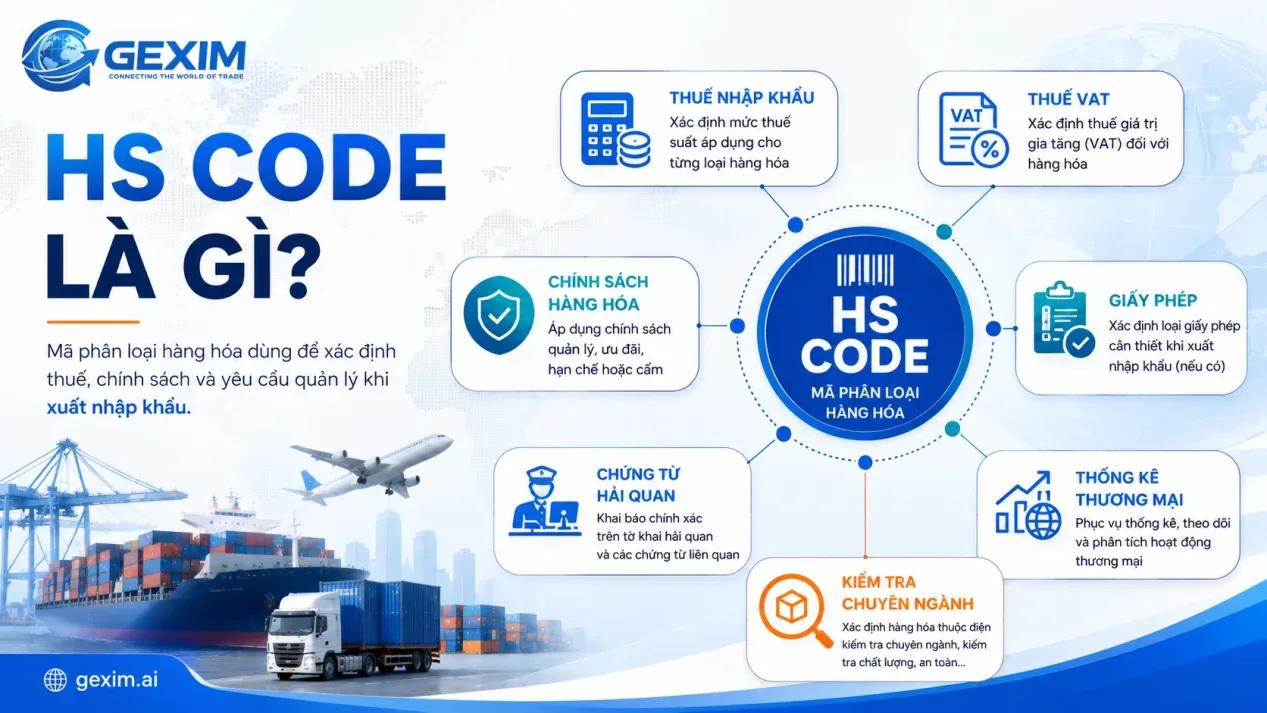
What is an HS Code? Structure and usage in import & export
An HS Code is a product classification code used in trade. Learn about the HS code structure, its digits, and its impact on duties and trade policies.
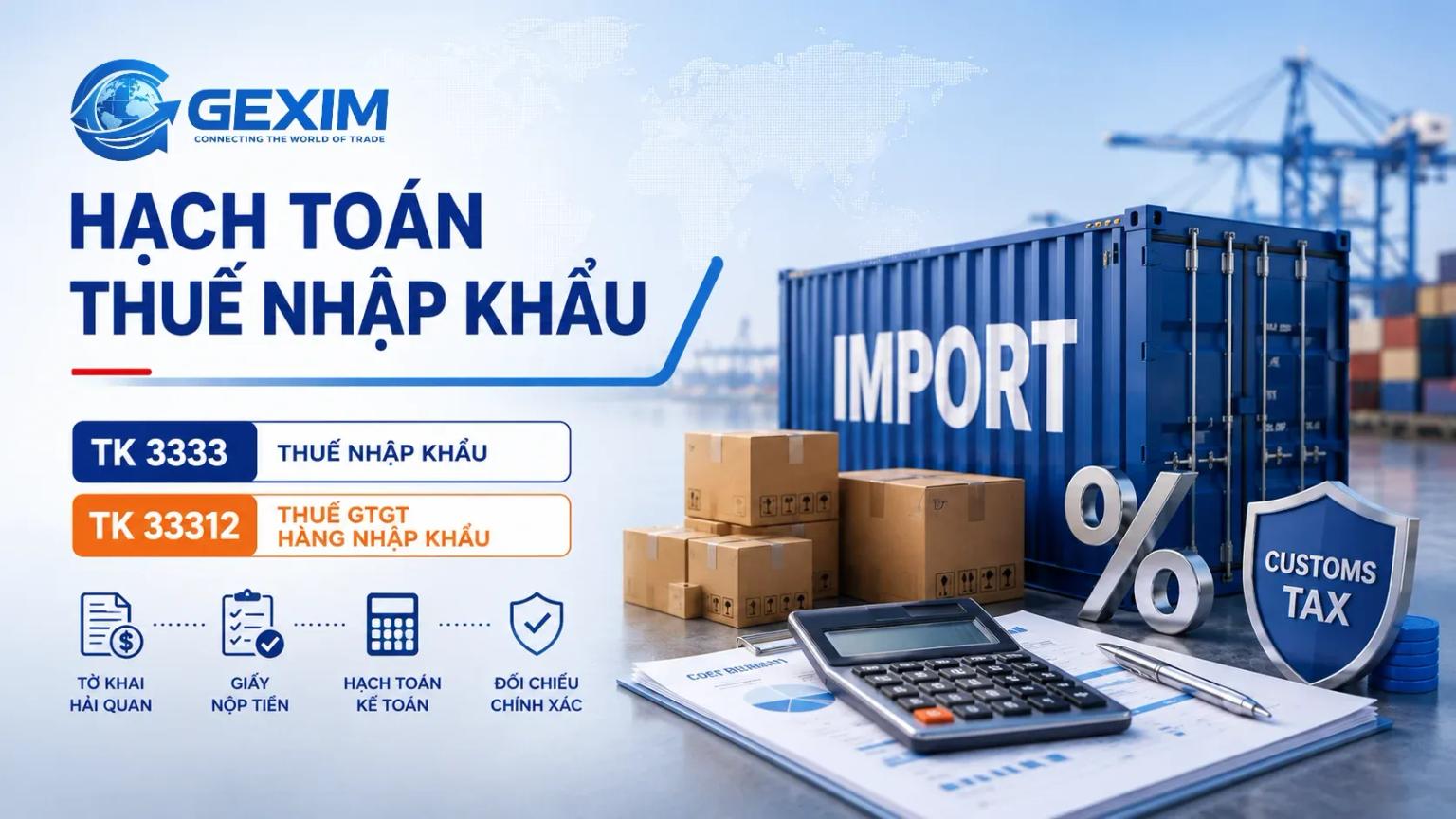
Accounting for import duty and import VAT: Account 3333, Account 33312
Detailed guide on accounting for import duty (Account 3333), import VAT (Account 33312), tax payments, and accounting reconciliation.
How to look up HS codes accurately for import & export goods
A 5-step HS lookup workflow, official sources to use, common mistakes and how to apply AI to reduce classification errors.